
You run a small studio (fitness, Pilates, yoga, EMS or reformer) and juggle classes, members and payments. There is hardly any time left for marketing. That is exactly what this is about: an honest, practical plan for fitness studio marketing that works without an expensive agency and without a five-figure ad budget. No hype, no sales tricks. Just the levers that really work for small studios, and that you can put in place yourself.
We build software for studios like yours, so we know the day-to-day: the packed class calendar, the quiet cancellation after eight weeks, the question of whether a promotion pays off at all. If you are only just planning to open a studio, think about marketing from day one.
What fitness studio marketing really means for small studios
For you, marketing is not an advertising budget. It is the sum of visibility, trust and what your members tell others about you.
The big chains win on price and reach. Your advantage is different: closeness, a familiar face, real support. People come to you because they know you, not because you are the cheapest. You cannot buy this kind of gym marketing. You build it week by week.
One honest premise up front: winning members and keeping them belong together. A new member does little for you if three existing ones cancel at the same time. That is why we treat both sides equally. Little time and budget are not a drawback, as long as you focus on a few levers instead of doing everything by halves.
Positioning: why should people come to you of all places?

Say in a single sentence who you are there for and what you do differently. This positioning is the foundation that all your later advertising builds on.
Examples: “Reformer Pilates for beginners who feel uncomfortable in a big gym.” Or: “Calm yoga without pressure to perform, in small groups.” The sharper your sentence, the easier every channel decision becomes afterwards. Understanding your audience always comes before choosing channels: first know who you want to reach, then decide where.
A clear offer makes the rest easier: a trial session, a four-week beginners’ course, a taster week. That way every prospect has a concrete next step.
Use real stories rather than stock photos. A testimonial from your members or an honest before-and-after story is a hundred times more credible than a bought image. This overview of online marketing for fitness studios (in German) also shows how important clear differentiation and transparent communication are.
Get found locally without spending a euro on ads
Most people look for their studio on Google, usually including their town or area. Your most important free channel is therefore your Google Business Profile.
Fill it out completely: opening hours, current photos, your classes and a direct booking link. A well-kept profile brings you more enquiries than any paid ad, and costs nothing but 30 minutes.
Reviews are the second lever. Ask for them actively and in person after a session. A happy member will gladly write two sentences if you ask nicely, but rarely does so unprompted.
For your website, lean and fast beats glossy. A clear page with a visible way to book and a call to action beats any elaborate site without one. For local SEO, name your location and offer directly in titles and copy, for example “Pilates studio in [neighbourhood]”. For an overview of further channels, see these basics of fitness studio marketing (in German).
Social media that pays off, and what you can skip
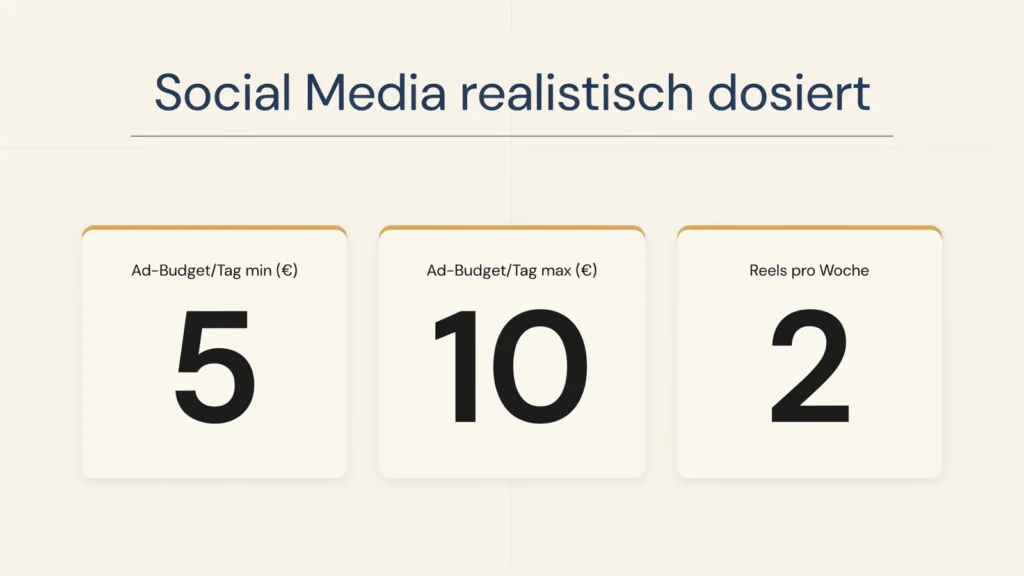
Stick to a few formats you can keep up over time: short Reels from everyday classes, Stories with a look behind the scenes at your team, and the occasional post about a new class.
Good social media marketing for a fitness studio does not stare at follower counts. Your most important KPIs are clicks to booking, trial sessions generated and conversion from prospect to member. A thousand followers who never book are no use to you.
If you want to test ads, keep them local and small: a specific trial session offer for people nearby, rather than casting a wide net. Just 5-10 euros a day is enough for a first test.
And honestly: posting daily is not a must. Consistency beats frequency. Two good Reels a week that you actually keep up have more effect than a flash in the pan that fizzles out after two weeks.
Referral marketing: your cheapest lever

Your happy members are the best advertising you have. Make referring easy and reward it, and this channel almost runs itself.
A simple bring-a-friend offer is enough: a member brings someone along and both get something concrete, such as a free month, a private session or a small credit. What matters is that the reward is clear and instantly understood.
Good rewards are gift vouchers that you sell online and that can be redeemed as a discount or credit, or credits from class packs and memberships.
Local partnerships bring extra reach without an ad budget. Approach physiotherapists, the café next door or the organic shop. Recommending each other costs nothing and reaches exactly the people near you.
Community events and open sessions make it easier for newcomers to take the first step. An open Sunday or a summer workout in the park brings prospects into your studio before they have to commit to anything.
Keeping members: retention beats acquisition
Winning a new member costs you many times more than keeping an existing one. Retention is the quiet revenue driver that almost everyone overlooks.
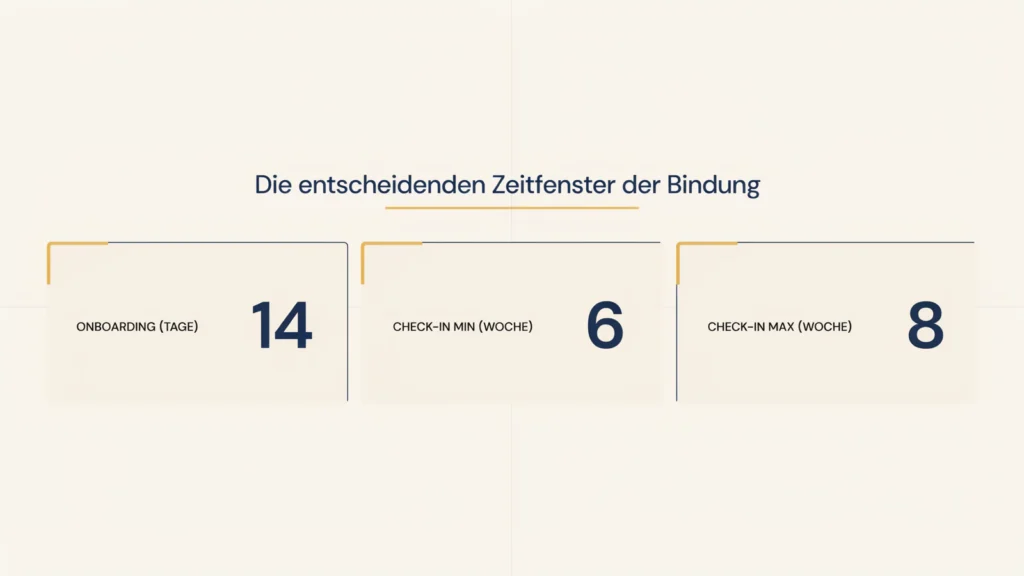
The most important moment is the first few weeks. Structured onboarding decides whether someone stays or quietly disappears: a welcome, a first training plan, a clear start. People who feel seen in the first 14 days stay.
After that, a regular rhythm keeps motivation high. A check-in every six to eight weeks prevents the quiet cancellation. A short nudge at the right time noticeably keeps training motivation up.
Your real USP is the community. People stay for the community, not the equipment. Personal communication reinforces that: a birthday message, a friendly win-back email after a longer absence. With the right studio software this runs largely automatically, without you having to track every contact by hand.
Numbers you should keep an eye on
Without numbers, marketing is gut feeling. Measure a few metrics consistently. That beats any overloaded dashboard that nobody ends up maintaining.
These four are enough to start with:
| Metric | What it tells you |
|---|---|
| Cost per lead | What a prospect costs you |
| Cost per new member | When a campaign pays for itself |
| Churn rate | How many cancel each month |
| Contribution margin per member | What is left after costs |
Your churn rate says more about your studio than any follower count. Track it month by month: if it rises, something is wrong with onboarding or support. And know your contribution margin before you give discounts, or your offers will end up in the red. If you want to go deeper into strategy and metrics, the course on marketing management for fitness studios (in German) gives you a structure.
Your simple marketing plan for the next 90 days
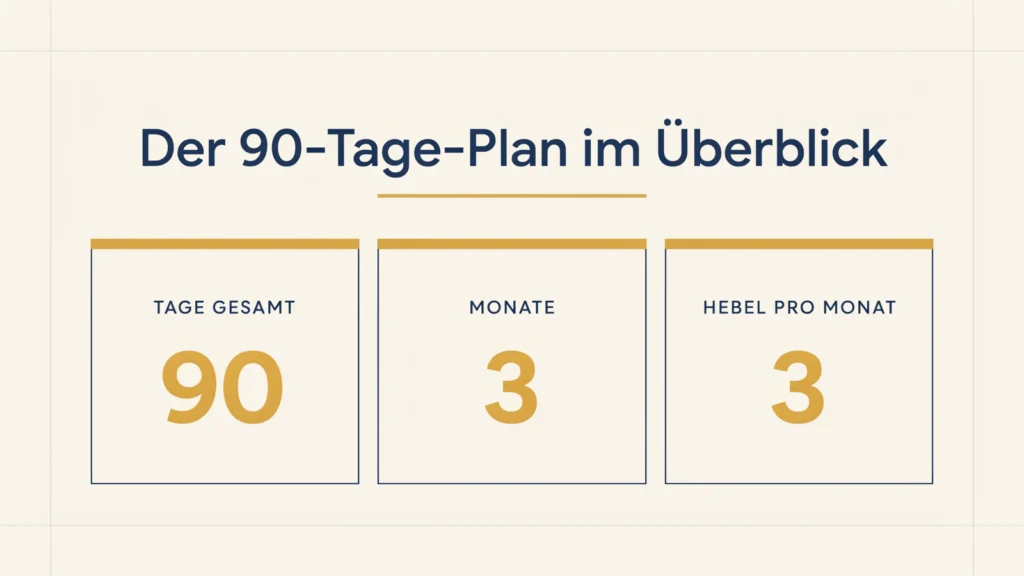
A realistic plan puts three levers properly into practice rather than ten half-heartedly. Here is what that looks like over a quarter:
- Month 1, foundation: sharpen your positioning into one sentence, tidy up your Google profile and booking path, actively collect reviews.
- Month 2, growth: launch a referral programme and establish two social formats you can keep up.
- Month 3, retention and review: introduce onboarding and a check-in rhythm, review the first numbers from months 1 and 2.
Stay realistic. Better to follow through on three measures than to give up on ten after two weeks. After 90 days you will know what works for you, and you can build on that.
Frequently asked questions
How much budget do I need for fitness studio marketing?
A lot can be done without a budget: your Google profile, referrals and community building only cost time. Ads are optional. If you test them, keep it small and use a clear trial session offer. Consistency and good member retention matter more than budget.
Which marketing channels are most worthwhile for a small studio?
Your Google Business Profile and local SEO, referral marketing and one or two social media formats. Your choice of channels follows your audience, not the latest trend.
How do I keep members for the long term?
With structured onboarding, a check-in every six to eight weeks, a real community and personal communication. Measure your churn rate and follow up actively when someone quietly stops coming.
How often do I need to post on social media?
There is no fixed rule. Consistency beats frequency: better a few good Reels and Stories that you keep up, with an eye on booking-related KPIs rather than followers.
Is a marketing agency worth it for small studios?
You can handle the basics yourself: profile, referrals, onboarding. An agency only pays off once those foundations are in place and you have a budget for performance marketing.

Written by
Studio software with no small print
Booking, members and payments for your studio. Fixed price, no commission per booking.
From 39 € a month · no credit card · cancel monthly · free migration